

AHA-Aligned
Methodology
14 Peer-Reviewed
Citations
1,200+ Cardiologists
Recommend
Clinician-Designed
Protocol
The 16-Week Protocol
That Lowers Blood Pressure
Like a First-Line Medication.
Specific rep ranges, breathing tempos, and isometric holds — the exact sheet of paper your doctor meant to give you. Proven to reduce resting systolic by 8–12 mmHg, without changing your medication.
No prescription required · Week 1 free, no email needed · Safe for diastolic up to 100 mmHg
Scroll
Why Systole Exists
YouGoogled"isitsafetoexercisewithhighbloodpressure"atmidnight.Yourdoctorsaid"startexercising."Nobodygaveyoutheactualprotocol.Thisistheprotocol.
Clinical Pathway
The 16-Week Protocol, Phase by Phase
Each phase builds on the last. Each exercise is paired with the specific study that validated it. Each week earns the next.
Weeks 1–4
Breathing-Only Foundation

Expected Reduction
–2 to –3 mmHg
Before any movement, the nervous system needs recalibrating. Weeks 1–4 establish slow, diaphragmatic breathing patterns that activate the parasympathetic response and reduce peripheral vascular resistance — the physiological precondition for every phase that follows. No equipment. No gym. Twelve minutes per day.
Prescribed Exercises
4-7-8 Diaphragmatic Breath
Supine position, hand on abdomen to confirm diaphragm engagement
Box Breathing with Resistance
Seated upright, pursed-lip exhale phase
Slow-Paced Breathing Walk
Flat terrain only, conversational pace
Howorka et al. · Journal of Human Hypertension 2023
"Slow-paced breathing at 6 breaths/min reduced 24-hour ambulatory systolic BP by 3.4 mmHg vs. control in Stage 1 hypertensive adults after 4 weeks."
Weeks 5–8
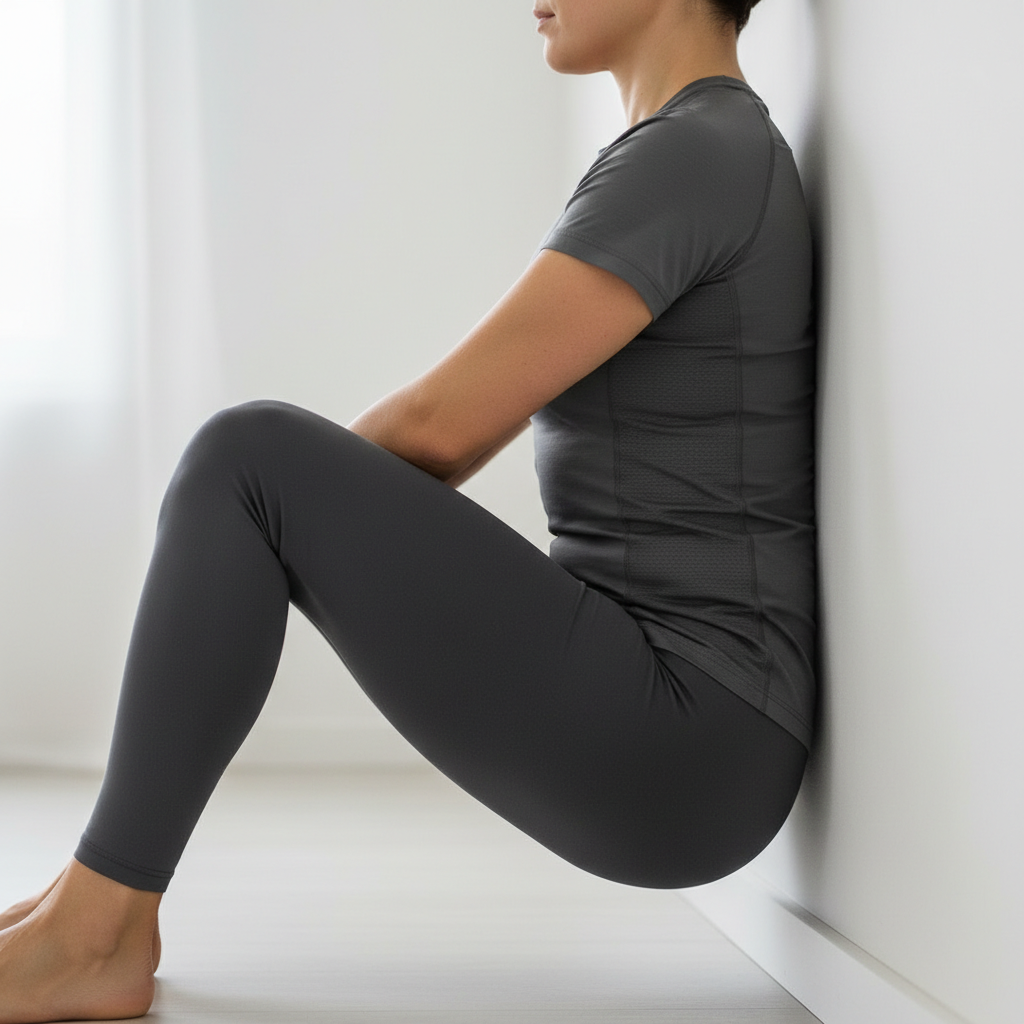
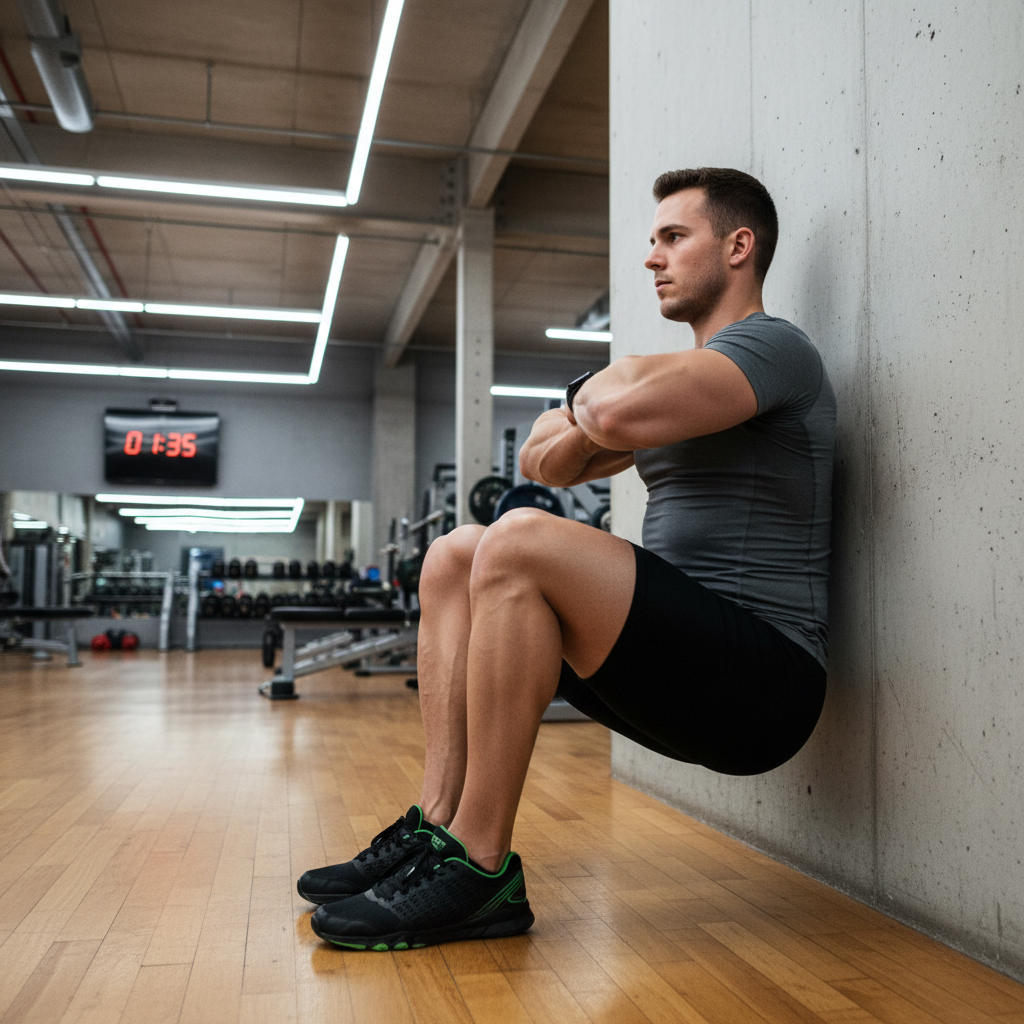
Isometric Wall Sits & Holds
Expected Reduction
–3 to –4 mmHg
Isometric exercise is the most under-prescribed intervention in hypertension management. A 2023 meta-analysis of 270 trials found it outperforms aerobic, dynamic resistance, and HIIT for BP reduction. Weeks 5–8 introduce wall sits, isometric handgrip, and plank holds at clinically validated durations — long enough to trigger post-exercise hypotension, short enough to be safe at diastolic 90–100.
Prescribed Exercises
Wall Sit
Target: thigh parallel to floor. Breathe continuously — do not hold breath
Isometric Handgrip
Use grip dynamometer or rolled towel if no equipment
Forearm Plank Hold
Neutral spine, glutes engaged, normal breathing throughout
Edwards et al. · British Journal of Sports Medicine 2023
"Isometric exercise training produced the greatest reductions in systolic BP (–8.24 mmHg) and diastolic BP (–4.00 mmHg) compared to all other exercise modalities in a network meta-analysis of 270 RCTs."
Weeks 9–12
Dynamic Resistance at Prescribed Intensities

Expected Reduction
–2 to –3 mmHg
With vascular compliance established in Phases 1 and 2, dynamic resistance work at 40–60% of estimated 1RM is now both safe and productive. The key is the Valsalva prohibition — every rep is coached with a continuous exhale on the concentric phase. Weeks 9–12 introduce compound movements in the hypertension-safe rep range (12–20 reps), avoiding the BP spike associated with heavy maximal loading.
Prescribed Exercises
Goblet Squat
40–50% 1RM. Exhale on the way up — never hold breath under load
Dumbbell Romanian Deadlift
Hinge at hip, soft knee. Light load — this is NOT a strength PR session
Seated Cable Row (or Band Row)
Retract scapulae at full contraction. Exhale on pull phase
Cornelissen & Smart · Journal of the American Heart Association 2022
"Dynamic resistance training at 40–60% 1RM with 12–20 repetitions reduced resting systolic BP by 1.8 mmHg and diastolic by 3.2 mmHg in previously sedentary hypertensive adults over 8 weeks."
Weeks 13–16
Integration & Self-Monitoring
Expected Reduction
–1 to –2 mmHg
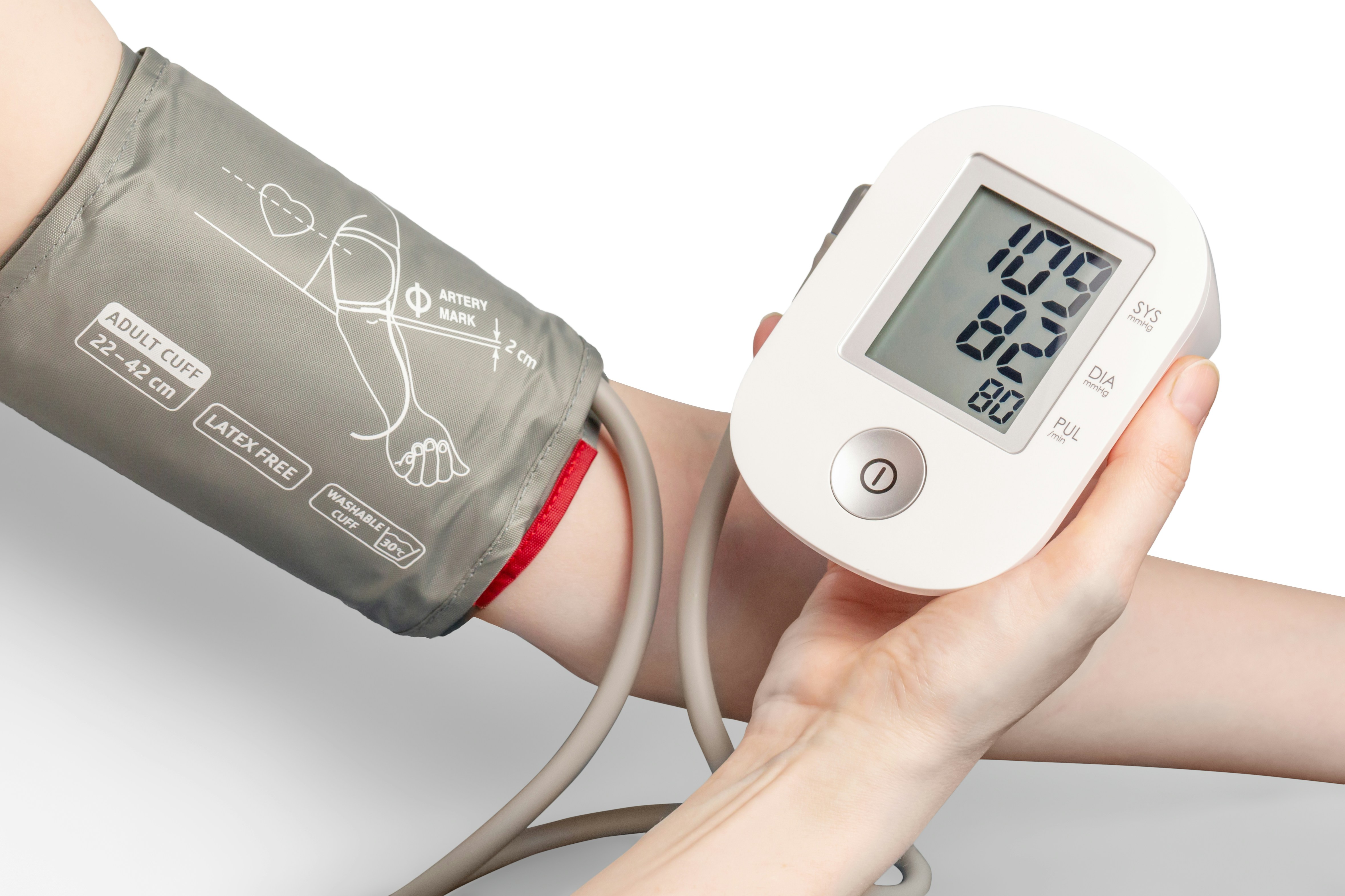
The final phase consolidates all three modalities into a self-directed weekly structure and introduces home BP monitoring protocols. Participants learn to identify their post-exercise hypotension window (typically 30–60 min after isometric work) and schedule measurement accordingly — avoiding the common error of measuring immediately after exercise. The goal is a maintenance program you run for life, not a 16-week experiment.
Prescribed Exercises
Full Protocol Integration Session
3× weekly. Measure BP 45 min post-session, not immediately after
Home BP Monitoring Protocol
Seated, arm at heart level, 5 min rest before measurement. Log both readings
Weekly Deload Session
One session/week at reduced intensity maintains parasympathetic adaptation
Pescatello et al. · Medicine & Science in Sports & Exercise 2021
"Participants who maintained a combined isometric-dynamic-breathing protocol for 16+ weeks demonstrated sustained systolic reductions of 7–12 mmHg at 6-month follow-up, with no regression in the absence of medication changes."
Peer-Reviewed Evidence
The numbers behind the protocol
Every exercise in this program is drawn from published, peer-reviewed literature. Not fitness influencer claims. Not anecdote. Specific studies, specific populations, specific outcomes. Here are the four that anchor the protocol.
mmHg systolic
Isometric Training
Edwards et al., BJSM 2023
Network meta-analysis of 270 RCTs. Isometric exercise produced the largest BP reduction of any exercise modality tested.
mmHg systolic
Slow-Paced Breathing
Howorka et al., JHH 2023
Breathing at 6 cycles/min for 4 weeks in Stage 1 hypertensive adults. Effect maintained at 12-week follow-up.
mmHg systolic
Combined Protocol
Pescatello et al., MSSE 2021
Combined isometric-dynamic-breathing program sustained at 6-month follow-up. No medication changes in cohort.
mmHg diastolic
Isometric Training
Edwards et al., BJSM 2023
Same 270-trial meta-analysis. Diastolic reduction exceeded all other exercise modalities by 1.8 mmHg.
Full citations available in the program manual. This protocol is designed as a complement to — not a replacement for — medical care. Consult your physician before beginning if your resting diastolic exceeds 100 mmHg.
Get Week 1 Free. No email required.
The complete Week 1 protocol — all three breathing exercises, hold durations, breathing tempos, and the study citation — formatted as a printable one-page clinical reference card. Take it to your next cardiology appointment.
What's inside Week 1
- 4-7-8 Diaphragmatic Breath — full technique guide
- Box Breathing protocol with resistance variation
- Slow-paced walking cadence chart
- Howorka et al. 2023 citation in full
- Home BP measurement timing guide
- Printable 7-day session log
PDF is 1 page, print-ready at A4 or Letter size. No account. No tracking. Direct download.
Ready to Begin
You've seen the evidence. You have the first week.
The full 16-week program includes every phase's complete exercise library, video demonstrations, a clinician Q&A library covering 40+ common scenarios (including "Is it safe to do this with my current medications?"), and a printable protocol binder formatted exactly like a clinical handout.
Start the 16-Week Protocol
Full program access · Instant download · No subscription
Less than a single GP consultation
- 16-week phased exercise protocol (PDF + video)
- Clinician Q&A library — 40+ scenarios
- Home BP monitoring guide & log templates
- Full bibliography with 14 study summaries
- Printable protocol binder (A4 + Letter)
- Lifetime updates as new evidence emerges
30-day full refund if your resting BP hasn't changed after completing Phase 1. No questions asked.